

- Joined
- Apr 7, 2013
- Messages
- 141,458
By Jon Machota
Oct. 3, 2026 6:05 am CDT
It has been 401 days since the Dallas Cowboys traded Micah Parsons to the Green Bay Packers. While many have seemingly moved on, the Dallas Cowboys are still feeling the impact of that stunning move.
Depending on the results, don’t be surprised if Cowboys owner Jerry Jones one day includes Wednesday night’s trade for cornerback Joey Porter Jr. as part of the return.
Hours after Parsons was moved, Jones said the two first-round picks, veteran defensive tackle Kenny Clark and the salary-cap space they created in the trade “could get us three and as many as five outstanding players.”
That statement left Jones with wiggle room. He has made the case several times since that being able to acquire and pay four to five quality players is a better investment than paying one superstar. The Packers signed Parsons to a four-year, $186 million contract. The total value of the deal is the highest among defensive players in league history.
To this point, the Parsons trade doesn’t look good for the Cowboys. They’ve had one of the NFL’s worst defenses since. Last year’s group was arguably the worst in franchise history. There hasn’t been much improvement through three games this year.
Jones has been heavily criticized for the decision to trade an elite pass rusher entering the prime of his career. Despite having one of the league’s best offenses, the Cowboys aren’t ending their 30-year Super Bowl drought unless the defense gets much better.
And until that happens, many will blame Jones for trading one of the NFL’s most valuable defenders. That undoubtedly has contributed to moves like the one Wednesday night.
The 2028 second-round pick and the 2027 sixth-round pick the Cowboys sent to the Pittsburgh Steelers for Porter aren’t directly connected to the Parsons trade. The players who can certainly be included in that blockbuster deal are Clark, defensive tackle Quinnen Williams and rookie edge rusher Malachi Lawrence. The Cowboys have since signed Williams to a three-year, $105.9 million contract extension to be the face of their defense.
Those three players have been solid but not nearly as impactful as Parsons was during his two first-team All-Pro and one second-team All-Pro years in Dallas. Parsons hasn’t played yet this season as he is recovering from a torn ACL, but he was a first-team All-Pro player last year in Green Bay.
Jones has been critical of Parsons’ time in Dallas for the team’s inability to consistently stop the run, particularly in playoff games. Those teams weren’t great in that area, usually somewhere in the middle of the pack. But they could impact the quarterback, take the ball away and hold opponents to around 20 points per game. This year’s team is allowing 180 rushing yards per game, second-worst in the league, and 27 points per game.
Adding Porter, one of the league’s top cornerbacks, is a significant move, particularly in the scheme first-year defensive coordinator Christian Parker runs.
“We hadn’t totally checked that (cornerback) box in our mind when the season started,” Cowboys executive vice president Stephen Jones said Friday on 105.3 The Fan in Dallas. “We had (DaRon) Bland, but we really thought we needed another corner. And it’s always the chicken and the egg in terms of getting pressure (up front) and getting sacks versus covering them (on the back end).
“If you can cover them another half second then a lot of times the pass rusher gets home. If you don’t, then they don’t get home. We understand that a lot of people feel like we need to get more pressure on the defensive side, but the pressure starts to come when you cover them well.”
Dallas has one of the NFL’s worst pass defenses. Opposing quarterbacks have a combined passer rating of 121.3, third-worst in the league. The Cowboys have recorded only two sacks — also third worst in the league — and no interceptions, tied for worst in the league.
In previous years, it would be safe to assume the Cowboys would just ride it out with what they have. But this year feels different from Jerry Jones’ standpoint. The Porter trade was the latest example of an increased aggressiveness since the Parsons trade.
Hiring a defensive coordinator with no experience calling a defense was one example. The others have come in the overhauling of the defensive roster.
Here’s how the Cowboys’ roster was supposed to look entering last season before Parsons was traded a week before the season opener:
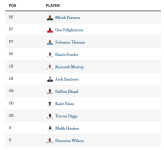
By the end of the season, the group looked like this:

Entering Sunday’s game at Houston, this is the projected top group:
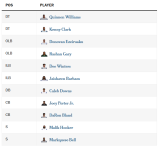
Some key missing pieces because of hamstring injuries on the current roster are Overshown, cornerback Cobie Durant and safety Jalen Thompson, Dallas’ top free-agent signing, who would be starting over Bell.
About 18 to 20 defenders play the majority of the snaps per game. In one offseason, 12 of those players have changed in Dallas. Outside of the starters, there is Lawrence, defensive tackle Otito Ogbonnia, defensive tackle Jonathan Bullard, safety P.J. Locke, Durant and edge rusher Von Miller.
Of those 18 to 20 top defenders from last season, this is the group no longer on the roster: Odighizuwa, Fowler, Thomas, Diggs, Elam, Wilson, Murray, Sanborn, edge rusher Jadeveon Clowney, edge rusher Sam Williams, linebacker Logan Wilson and cornerback Trikweze Bridges.
With some better health and more games in Parker’s scheme under their belts, there could be notable improvement. But at 1-2, they need to start seeing those better results soon.
Adding Porter was a smart move. If he plays well, they can work out a long-term deal after the season. If he doesn’t, they’ll likely get a third- or fourth-round compensatory pick back in 2028, softening the blow of losing a second-round pick in that same draft.
Would the Cowboys owner and general manager have made a similar move if defensive back help was needed after he paid Parsons? Maybe. But it’s clear that he’s willing to be more aggressive now.
While leaving an end-of-season news conference in January, Jerry Jones stopped to have a brief chat with a small group of local reporters at the team headquarters. He planted the seed that they could be doing business differently going forward. His actions have been speaking as loud as his words.
“We want to get out here and do better than we did this year,” he said at the time. “(Is there) the incentive to, dare I say it, bust the budget to try to get something done now? Yes. Yes. We’ll do some dramatic things. That was a dramatic thing we did (trading Parsons). We didn’t do it not to win games. The point is, this calls for some pretty controversial decisions. We’re gonna keep this thing as good as we can possibly be. Finances are no object. We’re gonna make it as entertaining as we can and keep it as lively as we can for everybody.”
Now we find out if it will be enough to get the Cowboys back in the playoffs for the first time in three years.
Oct. 3, 2026 6:05 am CDT
It has been 401 days since the Dallas Cowboys traded Micah Parsons to the Green Bay Packers. While many have seemingly moved on, the Dallas Cowboys are still feeling the impact of that stunning move.
Depending on the results, don’t be surprised if Cowboys owner Jerry Jones one day includes Wednesday night’s trade for cornerback Joey Porter Jr. as part of the return.
Hours after Parsons was moved, Jones said the two first-round picks, veteran defensive tackle Kenny Clark and the salary-cap space they created in the trade “could get us three and as many as five outstanding players.”
That statement left Jones with wiggle room. He has made the case several times since that being able to acquire and pay four to five quality players is a better investment than paying one superstar. The Packers signed Parsons to a four-year, $186 million contract. The total value of the deal is the highest among defensive players in league history.
To this point, the Parsons trade doesn’t look good for the Cowboys. They’ve had one of the NFL’s worst defenses since. Last year’s group was arguably the worst in franchise history. There hasn’t been much improvement through three games this year.
Jones has been heavily criticized for the decision to trade an elite pass rusher entering the prime of his career. Despite having one of the league’s best offenses, the Cowboys aren’t ending their 30-year Super Bowl drought unless the defense gets much better.
And until that happens, many will blame Jones for trading one of the NFL’s most valuable defenders. That undoubtedly has contributed to moves like the one Wednesday night.
The 2028 second-round pick and the 2027 sixth-round pick the Cowboys sent to the Pittsburgh Steelers for Porter aren’t directly connected to the Parsons trade. The players who can certainly be included in that blockbuster deal are Clark, defensive tackle Quinnen Williams and rookie edge rusher Malachi Lawrence. The Cowboys have since signed Williams to a three-year, $105.9 million contract extension to be the face of their defense.
Those three players have been solid but not nearly as impactful as Parsons was during his two first-team All-Pro and one second-team All-Pro years in Dallas. Parsons hasn’t played yet this season as he is recovering from a torn ACL, but he was a first-team All-Pro player last year in Green Bay.
Jones has been critical of Parsons’ time in Dallas for the team’s inability to consistently stop the run, particularly in playoff games. Those teams weren’t great in that area, usually somewhere in the middle of the pack. But they could impact the quarterback, take the ball away and hold opponents to around 20 points per game. This year’s team is allowing 180 rushing yards per game, second-worst in the league, and 27 points per game.
Adding Porter, one of the league’s top cornerbacks, is a significant move, particularly in the scheme first-year defensive coordinator Christian Parker runs.
“We hadn’t totally checked that (cornerback) box in our mind when the season started,” Cowboys executive vice president Stephen Jones said Friday on 105.3 The Fan in Dallas. “We had (DaRon) Bland, but we really thought we needed another corner. And it’s always the chicken and the egg in terms of getting pressure (up front) and getting sacks versus covering them (on the back end).
“If you can cover them another half second then a lot of times the pass rusher gets home. If you don’t, then they don’t get home. We understand that a lot of people feel like we need to get more pressure on the defensive side, but the pressure starts to come when you cover them well.”
Dallas has one of the NFL’s worst pass defenses. Opposing quarterbacks have a combined passer rating of 121.3, third-worst in the league. The Cowboys have recorded only two sacks — also third worst in the league — and no interceptions, tied for worst in the league.
In previous years, it would be safe to assume the Cowboys would just ride it out with what they have. But this year feels different from Jerry Jones’ standpoint. The Porter trade was the latest example of an increased aggressiveness since the Parsons trade.
Hiring a defensive coordinator with no experience calling a defense was one example. The others have come in the overhauling of the defensive roster.
Here’s how the Cowboys’ roster was supposed to look entering last season before Parsons was traded a week before the season opener:
By the end of the season, the group looked like this:
Entering Sunday’s game at Houston, this is the projected top group:
Some key missing pieces because of hamstring injuries on the current roster are Overshown, cornerback Cobie Durant and safety Jalen Thompson, Dallas’ top free-agent signing, who would be starting over Bell.
About 18 to 20 defenders play the majority of the snaps per game. In one offseason, 12 of those players have changed in Dallas. Outside of the starters, there is Lawrence, defensive tackle Otito Ogbonnia, defensive tackle Jonathan Bullard, safety P.J. Locke, Durant and edge rusher Von Miller.
Of those 18 to 20 top defenders from last season, this is the group no longer on the roster: Odighizuwa, Fowler, Thomas, Diggs, Elam, Wilson, Murray, Sanborn, edge rusher Jadeveon Clowney, edge rusher Sam Williams, linebacker Logan Wilson and cornerback Trikweze Bridges.
With some better health and more games in Parker’s scheme under their belts, there could be notable improvement. But at 1-2, they need to start seeing those better results soon.
Adding Porter was a smart move. If he plays well, they can work out a long-term deal after the season. If he doesn’t, they’ll likely get a third- or fourth-round compensatory pick back in 2028, softening the blow of losing a second-round pick in that same draft.
Would the Cowboys owner and general manager have made a similar move if defensive back help was needed after he paid Parsons? Maybe. But it’s clear that he’s willing to be more aggressive now.
While leaving an end-of-season news conference in January, Jerry Jones stopped to have a brief chat with a small group of local reporters at the team headquarters. He planted the seed that they could be doing business differently going forward. His actions have been speaking as loud as his words.
“We want to get out here and do better than we did this year,” he said at the time. “(Is there) the incentive to, dare I say it, bust the budget to try to get something done now? Yes. Yes. We’ll do some dramatic things. That was a dramatic thing we did (trading Parsons). We didn’t do it not to win games. The point is, this calls for some pretty controversial decisions. We’re gonna keep this thing as good as we can possibly be. Finances are no object. We’re gonna make it as entertaining as we can and keep it as lively as we can for everybody.”
Now we find out if it will be enough to get the Cowboys back in the playoffs for the first time in three years.