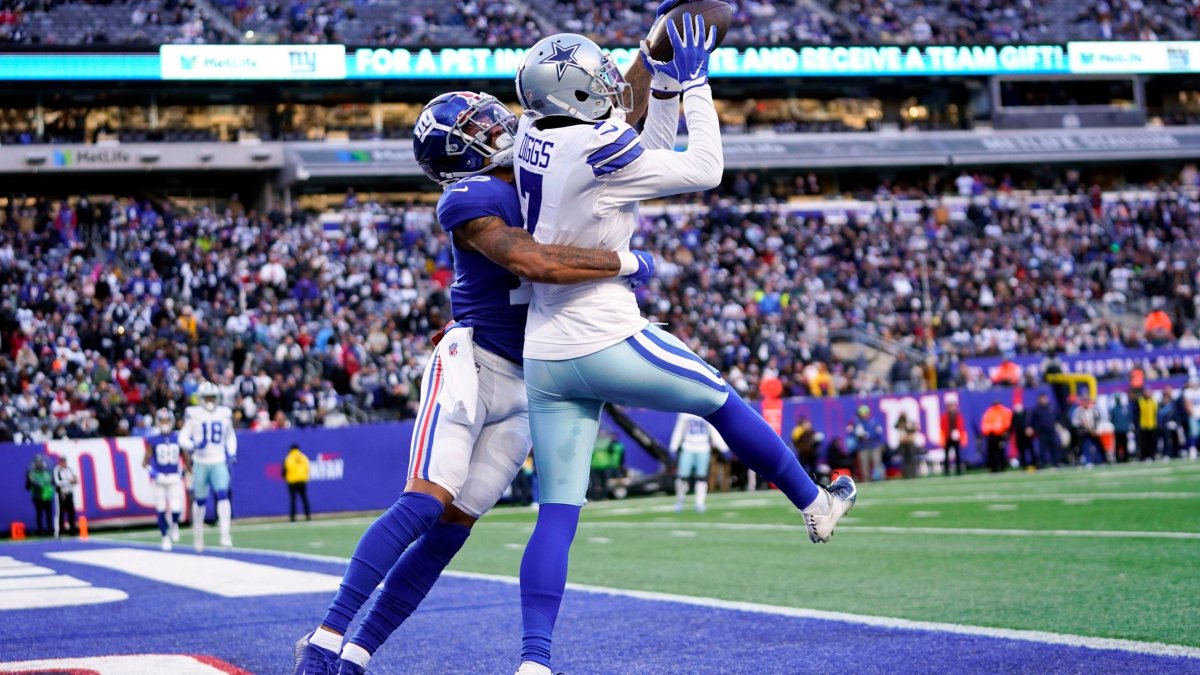
I also think their algorithm probably don’t have interceptions weighted highly enough nor distinguished properly.
Getting an interception ends the drive. In fact, it almost eliminates any yards a DB may have allowed during that entire drive. Does PFF’s algorithm consider that? If Trevon Diggs gave up same drive 5/5 completions for 50 yards but then recorded an INT on the sixth pass, the previous 5 completions should almost be negated.
Secondly, the location of the INT and subsequent return is a huge deal because of the point swing due to field position. Getting an INT in our red zone is nice because it stops a scoring drive, say 7 points for a TD, but getting an INT in our opponents red zone is worth more because it sets up our offense for our TD, you could consider a maximum of 14-point swing.
#1, Tampa Bay 20 yard line, no return
#2, Cowboys 20, no return
#3, Cowboys 40, (pick six)
#4, Cowboys 40, (retuned to Carolina 40)
#5, Carolina 30
#6, Cowboys 20, (Cowboys 40)
#7, Patriots 40, (pick six)
#8, Midfield
#9, Cowboys 40
#10, Cowboys end zone, (touchback to 20)
#11, Cowboys 30
Four of Diggs INTs put Cowboys offense in or almost scoring position. Combine that with two pick sixes.
How much does PFF weigh an INT over, say, a deflection? A sack? Even with a deflection or sack on 1st down, an offense can cancel that out next play second down with a big play. You can’t cancel out an INT. You could ballpark it and say Diggs 11 INT is probably worth as much as, if not more, than 22 sacks. How many drives end from those 22 sacks -just guessing around 11.